

© 2025 - Anglo Italian Family History Society
Website by Beachshore
First World War
Click on the links below or on the side panel to the left and discover more information to guide your research:
First World War: National Archives UK and place
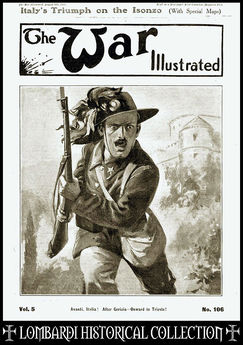
August 26th, 1916
Lombardi Historical Collection
The National Archives aims to engage new audiences with its collections and to offer historians and regular archive users fresh insights into this landmark conflict.
Duty and Democracy, Parliament and the First World War
“It is by this House of Commons that the decision must be taken, and however small a minority we may be who consider that we have abandoned our attitude of neutrality too soon, every effort should still be made to do what we can to maintain our attitude of peace towards the other Powers of Europe…War is a very different thing today from what it has been before. We look forward to it with horror.”
Arthur Ponsonby MP – House of Commons, 3 August 1914
The Anglo Italian Military Service Agreement: Italians of Military Age in the United Kingdom
At the start of World War I the United Kingdom was the sole European country without compulsory
military service. With an increasingly desperate need for men for the trenches, the Britain Government enacted legislation enabling agreements to be reached with individual allied governments including, in 1917, the Kingdom of Italy, the purpose being effectively to bring nationals from that country within the jurisdiction of the UK Military Service Acts. The agreement required Italian men of military age in the UK either to return to Italy for military service or, if they remained, to be subject to the UK conscription laws. Repatriation was to take place within a specified period from the date of the announcement of the agreement.
Documents transcribed for our searchable transcription database by members Andrew Mitchell and Colin Moretti are stored at The National Archives, Kew, in TNO Piece HO 45/10783/281476WAR. No attempt has been made to correct any mistakes in the original documents although some possible errors have been noted; some of the authors of documents seem to have had problems with the spelling of UK place names as well as the usual difficulties with Italian names. While every effort has been taken to avoid transcription errors neither the authors nor the Anglo-Italian Family History Society can accept responsibility for any loss arising from the use of this publication. Readers are advised to consult the original documents in all cases where a correct reading of the text is important.
Italy enters the First World War
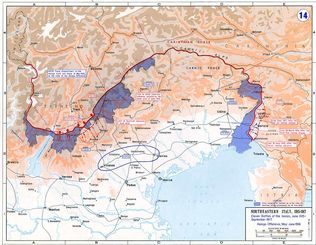
On April 26, 1915, Italy negotiated the secret Pact of London by which Great Britain and France promised to support Italy annexing the frontier lands in return for entering the war on the Entente side. On May 3, Italy resigned from the Triple Alliance and later declared war against Austria-Hungary at midnight on May 23.
At the beginning of the war, the Italian army boasted less than 300,000 men, but mobilization greatly increased its size to more than 5 million by the war’s end in November 1918. Approximately 460,000 were killed and 955,000 were wounded in the conflict.
This article focuses on Italian emigrant women in the Americas, Europe and North Africa and uncovers how their experiences differed both from those of women in Italy and from those of other women in their adopted countries. The female emigrants most affected by the war were the wives of the 300,000 reservists who returned to Italy for their military service, which plunged many families into crisis. The difficulties faced by all wives of mobilised soldiers were exacerbated for female Italian emigrants. As Italian men had been the only emigrant group to depart en masse for service at home, the case of Italian women is unique. As non-citizens, they were generally not entitled to state aid. In addition, the Italian government subsidy was entirely insufficient abroad and many families were ineligible for support. This article thus explores how the Italian government and private charity abroad responded to this unfolding crisis in Italian emigrant communities and how the women themselves experienced the war and the new challenges of being an emigrant on a foreign home front.
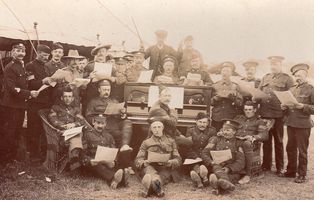
Military records identify individuals who served in the military or who were eligible for service. From 1865 on, all young men were required to serve in or register for military service in Italy. Evidence that an ancestor actually served may be found in family records, biographies, census, probate records, civil registration, and church records. Church records and civil registration records have much the same information as military records, and they are usually easier to access. However, you must know the name of a town before you can search them. If you do not know the name of a town, provincial military records can identify a man’s birthplace. Even if you know only the region, you can check the records of all military districts within the region.
Italian Soldiers Fallen World War I
Albo dei Caduti Italiani della Grande Guerra: a register of the roll of honour of Italian soldiers fallen in the First World War. Compiled with patronage of the Italian Ministry of Defence.
Encountering Italy: Military Service and National Identity during the First World War
The author explore the idea of 'Italy' in the imagination of peasant and working class Italian soldiers during the First World War.
World War 1 and the Rise of Facism in Italy, Russo, Gianluca
One of the key steps that allowed Mussolini to become the Italian Duce was the victory in the 1924 national elections. Russo studies the impact of World War I on Mussolini’s electoral success, reconstructing the military death rate for the universe of Italian municipalities, which is matched to municipal level voting in the 1924 election. [...] finds that a higher share of fatalities increases the vote share for Fascism. In particular, the vote share for Fascism is higher in municipalities with both higher fatality rates and a greater number of veterans returning from the frontline. [...] WWI deaths is driven by municipalities that in 1921 had above median vote shares for the Socialist party. This is consistent with the historical narrative that the initial rise of Mussolini was facilitated by the red menace: the threat of a Socialist revolution in Italy
Website by Beachshore