

© 2025 - Anglo Italian Family History Society
Website by Beachshore
Prisoners of War in Britain and Italy
Click on the links below and in the side panel to the left to discover more information to guide your research:
Enforced diaspora: the fate of Italian Prisoners of War during the Second World War
By the end of the war in Europe in 1945, more than one million Italian servicemen had become prisoners of war and dispersed across Europe, Norht America, South Africa, India, Asiatic Russia and Australia by their various captors. They had been taken captive in North Africa, Abyssinia and the Italian mainland by the British and Americans, and on the Eastern Front by the Soviet Union. However, thir country's surrender and reinvention as an Allied co-belligerent after Septembere 1943 meant that large sections of the Italian armed forces still in the feld had the dubious distinction of being interned and then utilised by their erstwhile German allies. [...] this study seeks to explain how the how the extensive prisoner diaspora came about ...
The camp was originally built in 1941-42 to house Italians from the North Africa campaign and only later in the war did it house German POWs. It consisted of a series of huts terraced into the slope of the Downs west of the Golf Club, on four corners of the camp were outlook towers. Even today traces of the camp can still be seen including the main entrance road to the camp and a levelled area that was used for football matches.
Glen Mill: the international history of a local PoW camp during World WarTwo, by Bob Moore 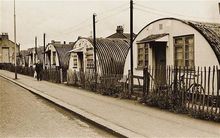
Several hundred thousand Axi prisoners were captured and brought to the United Kingdom. In spite of their numbers, with the exception of memoirs, written by those involved, and a few scholarly works, little has been written about them. Bob Moore's article expands on Glen Mill prisoner of war camp Wellyhole Street, Oldham, Lancashire. An original article from Manchester Region History Review magazine, 1995.
Glen Mill Prisoner of War Camp, Oldham Lancashire
Previously a mill, Glen Mill held a main mill building with four floors and many other smaller buildings. Additional huts were built for guards, prisoners and storage. There was capacity for 5000 prisoners.
Eden Camp Modern History Museum is a family owned and run business that started over 30 years ago. Originally a prisoner of war camp, it was built on an agricultural plot on the outskirts of Malton in early 1942, by a small contingent of army personnel who had travelled from Castle Douglas, Scotland. Their task was to construct a barbed wire enclosure and erect tents to form a temporary camp to accommodate Italian prisoners of war that had been captured by Allied forces in North Africa.
Prisoner of War Camps (1939 - 1948)
To date, with a few notable exceptions, very little has been written about World War II Prisoner of War Camps in the British Isles. This is surprising given that a large volume of documentary material exists at the Public Records Office, Kew (now The National Archives). Even less work has been undertaken to identify the total population and location of the camps. Incomplete lists have been published in a number of magazines and on the Internet, but often the addresses given have not been sufficiently detailed to permit an accurate interpretation. However, Dr Anthony Hellen, having undertaken his own research on the subject, provided English Heritage with a list of sites drawn from documentation held at The National Archives and the ICRC Archives in Geneva, to assist with our identification of sites.
World War Two PoW Camps in the United Kingdom
There are many groups and individuals with an interest in pow camps in the UK during World War 2: historians, (general, local, military, postal), photographers, genealogists, metal-detectorists, walking-groups and the generally curious. I started collecting information about the camps as an amateur postal historian.
Prisoners of War and Internees in Canada
Between 1939 and 1947, Canada operated a series of twenty-eight different internment camps, or prisoner of war camps, from Alberta to New Brunswick.[1] Ranging in capacity from a few hundred to over 12,000 prisoners of war (POWs), these camps held German combatant prisoners (officers and other ranks), German and Italian Enemy Merchant Seamen (EMS), and Civilian Internees of German, Italian, and Japanese descent.[2] Many camps were converted from existing facilities – like a pulp and paper mill, a sanatorium, and government forest research stations – while others were purpose-built facilities.
When the Italian PoWs left the island of Lambholm in Orkney in 1944, they must have assumed that their beautiful little chapel would be demolished with the rest of the camp. More than 70 years later, it is still here and this is the story of what happened after the Italians went home.
War Office (WO) Directorate of Prisoners of War
War Office: Directorate of Prisoners of War: Prisoners of War Lists, Second World War . Alphabetical lists of prisoners of war from all branches of HM Forces, including other nationals under British command, held in Germany or German-occupied territory, Italy and Japan or Japanese-occupied territory. The lists in this series were apparently compiled by the Directorate of Prisoners of War PW.3 section in collaboration with Cas(PW), presumably from information supplied by a protecting power and/or the Red Cross. Lists of prisoners of war held in record series WO 392. Most of the lists are available online at Findmypast but this collection is available only as an original document: WO 392/21 – Lists of members of the Allied Forces held prisoner in Italian hands, including personnel from the British Army, Australian Army, Canadian Army, New Zealand Army, South African Army, Indian Army, naval forces and air forces.
Campagna internment camp, located in Campagna, a town near Salerno in Southern Italy, was an internment camp for Jews and foreigners established by Benito Mussolini in 1940.
Research on Military Internees from Italy
Two historians from Bologna have devoted themselves to reconstructing the fates of the Italian “military internees” in German camps and prisons. In their efforts to learn more about this little-known aspect of Nazi history, Andrea Ferrari and Fabrizio Tosi of the National Association of Ex-Deportees into the Nazi Camps (ANED) have already carried out research in the ITS holdings several times.
General Index of Foreign Jews Interned in Italy 1940-1943.
In correspondence to Italy’s entering WWII (June 10, 1940), on June 15 the Ministry of Interior ordered foreign Jews to be arrested and interned. A 1938 law had ordered most of them to be expelled within six months, but many had stayed stuck because they lacked visas or money to pay the journey. Internment concerned German and Polish Jews as well as Jews from other Central European countries and stateless Jews. Adult men were sent to internment camps; women and children were left in their places of residence or were interned in small villages; afterwards, most of the families were reunited in the Ferramonti di Tarsia camp, in Calabria, or in several sites. Almost all internment camps and about half of the internment villages were in Southern and Central Italy. As time passed by and the theatre of war expanded, foreign Jews who were in Rhodes, in Libya and in Yugoslavia were also interned in Italy.
Website by Beachshore