
© 2025 - Anglo Italian Family History Society
Website by Beachshore
Starting Out on Your Genealogical Journey
Click on the links below and in the side panel to the left to discover more information to guide your research:
Always have a notebook by your side. 
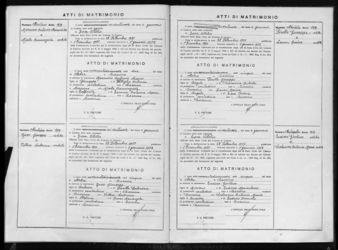
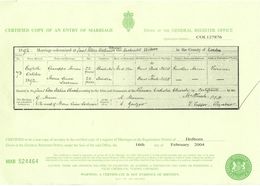
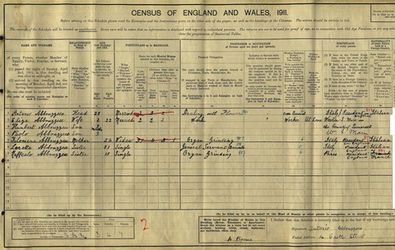
Collect archival documents, photos and information in your possession or belonging to your wider family: birth, death and marriage certificates, memorial cards, family bibles, photographs, correspondence, military records and medals, passports, alien registration booklets* and personal memorabilia.
Ancestors often unexpectedly come looking for us, in conversations, documents or newspaper cuttings. Even if people claim to know nothing, you may find that by chatting around a subject and asking questions a wealth of information is unearthed. Record every clue, no matter how small - you never know how useful it may become as you gather more information and clues gather meaning as they slot together.
It pays to be cautious when relying solely on memory or subjectivity: family stories can be emotive and their authors may be protective. Back information up with factual or documentary evidence wherever possible. When you've built up a picture of what is known, search for official records. It will help to think creatively throughout your genealogical journey, imagining possible routes and delving into unusual sources.
The following websites offer useful information and insights into research and heritage: click on the underlined blue link and it will take you straight there:
Inheriting the Family is an AHRC-funded network that explores the role of emotion in explaining why some objects and stories (and not others) are transmitted across generations and from the private sphere of the family to public spaces like museums and archives. The network brings together academics from across the world, along with heritage, museum and family history professionals, and members of the public with an interest in family history and inheritance. The network holds workshops and history harvests, collaborates on research and research publications, and seeks to connect people interested in this topic. Read on for more information on our people, events, history harvests, and keep up to date by checking out the blog.
The National Humanities Lecture: Prof. David Olusoga
Prof. Ulosoga explores how exciting new ideas about humanities, heritage and institutions are emerging - from virtual museums to hyper-local history projects and alternative city tours.
A Vision of Britain Through Time
Background Information - Italy
Research and Transcription Sources: Anglo Italian Family History Society
The Family History Federation promotes interest in genealogy and supports member societies
AGRA: The Association of Genealogists and Researchers in Archives
(AGRA) promotes high professional standards in the field of genealogy and historical research in England and Wales. All Members and Associates agree to abide by a Code of Practice and Ethics.
Online search of archives at the British LIbrary.
This catalogue is an interim version of the BL Archives and Manuscripts Catalogue. It contains catalogue records created before October 2023. When looking for any other collection items that aren't archives, manuscripts or visual arts collections, you can search for them in the BL main catalogue.
British Library Main Catalogue
You can use the search box above to look for records in the British Library’s printed collection and subscribed resources. If you need help and tips for searching, visit the Using the Catalogue page above, or else you can live chat with one of our team using Ask a Librarian system. You can log in using the icon in the header. Here you can access your Reader account and personal settings and see your requests and search history.
Founded in 1996 the platform was instrumental in taking the Anglo Italian Family History Society from parochial to national and, assisted by access to global social media platforms, international. Superseded by more advanced platforms, Rootsweb was closed in August 2023. Its World Connect family trees are now hosted by Ancestry.
A jumping off point for family history research with a categorized, cross-referenced index to genealogical resources.
A non-commercial website with a reference library containing genealogical information relevant to the UK and Ireland.
FamilySearch: Genealogy in Italy
The site includes a family tree facility, research guides and a network of Family History Centres through which their library and resources are made available. Some records can be viewed online.
In this genealogic research of Sicilian and Italian records, the Cognilio Family researcher (been able to trace many families back through several generations, into the early 1700s and even earlier. They have almost invariably found that there was at least one 'brick wall' in each of these families, where the line started with a child for whom both parents were listed on the civil registration of birth in Italian as 'padre ignoto' and 'madre ignota' or 'genitori ignoti' (father unknown, mother unknown, or parents unknown). Another way it was expressed was to follow the individual's name with the term "d'ignoti", e.g. "Maria Esposta d'ignoti", meaning "Maria Esposta of unknown [parents]". On earlier baptismal records, the parents of these children were listed in Latin as 'genitoribus incogniti' or 'parentis incogniti'. The Italian and Latin terms mean the same thing. A more pejorative term is used in some towns: 'padre incerto' (father uncertain). Church records may also describe foundlings as 'filius/filia universitatis' (son/daughter of the community).
Our bibliography offers a list of books, articles and DVDs that will support your research. It is regularly updated so please notify us if you find a useful addition.
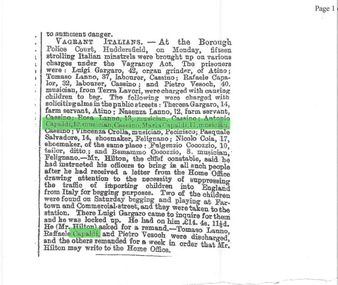
* Alien: in an era of science fiction movies such as ET (Extra Terrestrial) this term can sound out of place, even offensive. It was first used in the 14th century to describe something that felt strange or was of foreign origin. The UK government and institutions now prefer more neutral and respectful language when discussing immigration and foreign nationals. Instead of “alien” terms like “foreign national” or “non-citizen” are used in legal and government contexts. In 2021 US government agencies dealing with immigration were instructed to change their official language practices. Terms like “alien”, “illegal alien” and “assimilation” are no longer used. Instead, new vocabularies apply, including the words “noncitizen” for “alien” and “integration” for “assimilation”.
Website by Beachshore